


Sara Plourde
/
NHPR
NHPR’s coverage of the semiquincentennial — the signing of the Declaration of Independence on July 4, 1776 — and select stories 250 years in the making.
Resources: NH 250 from NH Dept. of State | America 250 | NH Division of Historical Resources | NH Historical Society
Map: Where are fireworks allowed in New Hampshire?
Events: Four parades that make us smile / Events calendar courtesy NH 250
As we recognize the 250th anniversary of America, what do you want the next 250 years to look like? What’s this anniversary mean to you? Email your responses to voices@NHPR.org and your voice may be featured on air or online in the next installment of The Big Question.
-
 Filmmaker Ken Burns joins Laura Knoy at the Capitol Center for the Arts to discuss how America’s history of struggle and resilience offers a roadmap for today's complex world.
 -
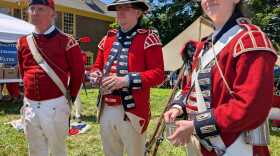 The American Independence Festival in Exeter celebrated the 250th anniversary of the nation’s founding Saturday.
 -
 As we reflect on the nation's 250th anniversary, NHPR's Civics 101 is diving deep into the unique facets of our national identity. How did a piece of fabric and a few pages of parchment become the ultimate mirrors of who we are?
 -
Join NHPR's Civics 101 & Ken Burns for a special episode exploring what it means to be American and how we got here.
-
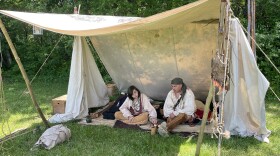 After nearly two centuries of disrepair, the Fort at No. 4 in Charlestown was rebuilt in the 1960s as an interactive, open-air museum dedicated to preserving local heritage.
 -
 The "Independence Tree" was planted in 1776 outside the Moffatt-Ladd House in Portsmouth by William Whipple, soon after he signed the Declaration of Independence.
 -
 Habrá espectáculos de fuegos artificiales por el 4 de Julio en algunas ciudades de New Hampshire el viernes y sábado.
 -
 It's legal to buy fireworks in New Hampshire, but not all cities and towns allow residents to use them.
 -
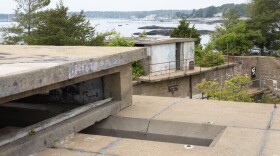 For more than 200 years, Fort Stark in New Castle was home to various military bases. Today, it's a place to relax and enjoy ocean views.
 -
 About 20 communities across the state are hosting simultaneous readings of “What to the Slave Is Your Fourth of July?”, a historic speech delivered by Frederick Douglass in 1852.


