


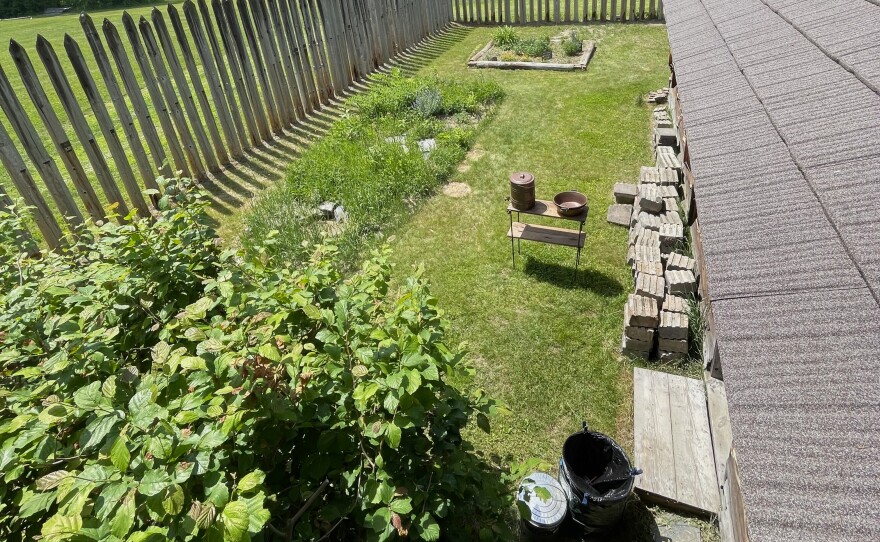

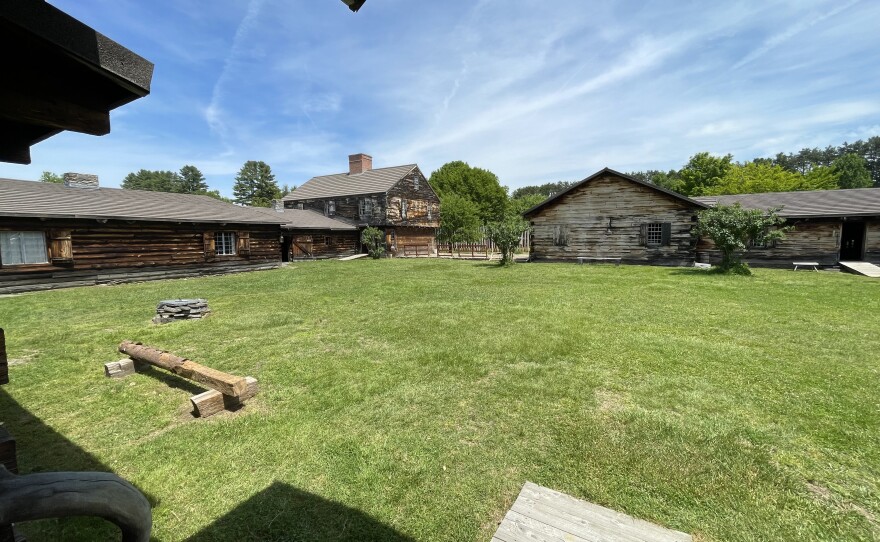
Perched on the Connecticut River along New Hampshire’s western border, the Fort at No. 4 was built in 1744 as a British stronghold during the French and Indian War. Decades later, it became a vital staging ground for Patriot militias, most famously hosting Brigadier General John Stark before the 1777 Battle of Bennington.
After nearly two centuries of disrepair, the site was rebuilt in the 1960s as an interactive, open-air museum dedicated to preserving local heritage.
For this week's Give Back New Hampshire, NHPR producer Olivia Comolli took a tour of Fort at No. 4.
Transcription:

Alissa Bascom: I am Alissa Bascom. I am the director of operations here at the Fort at number four in Charlestown, New Hampshire. It's been a passion project of mine. So this is something that's really, really important to our community, to our heritage here. I absolutely fell in love with the work, with our mission here, which is to educate people, mostly our young people, about why the history is important, why they should be proud of it.
The fact that we have this attraction that is so special, such a unique opportunity for people to come and really immerse them selves in history is what I love the most. You can't create that without a love of where you are and where you've come from. And the Fort at No. 4 does that.
KC Hill: We get all ages, from young teens that their parents bring them here because they want to be here, and to elderly folks who are very interested in history. And some of them have ties to the fort because of the families that they're part of, you know, their family roots.
The couple that I was just speaking with are from Utah. We get them. I had somebody that was here from Estonia over in Europe. We get people from all over the world here to visit.
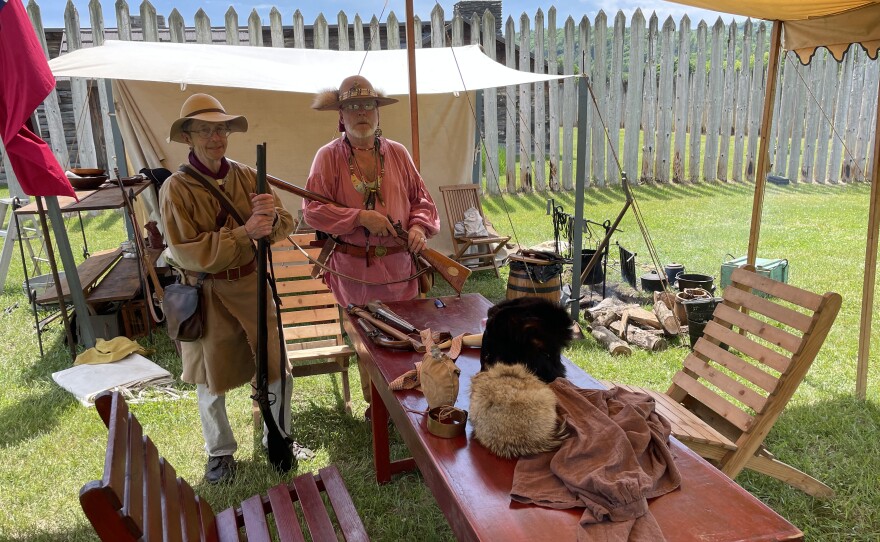
[As a re-enactor], I represent a bagpiper from the 42nd Regiment of Foot. The re-enactors that you see here are very meticulous, I think that anybody who comes can be immersed in the history of it and learn about the history of it. Just walking through and into the courtyard and you get surrounded by it, I think really gets people involved.

Looking out across the Fort, you can see the old structure come to life. The sounds of re-enactors are everywhere — cooking bread, polishing muskets, building furniture, laughing, and teaching.
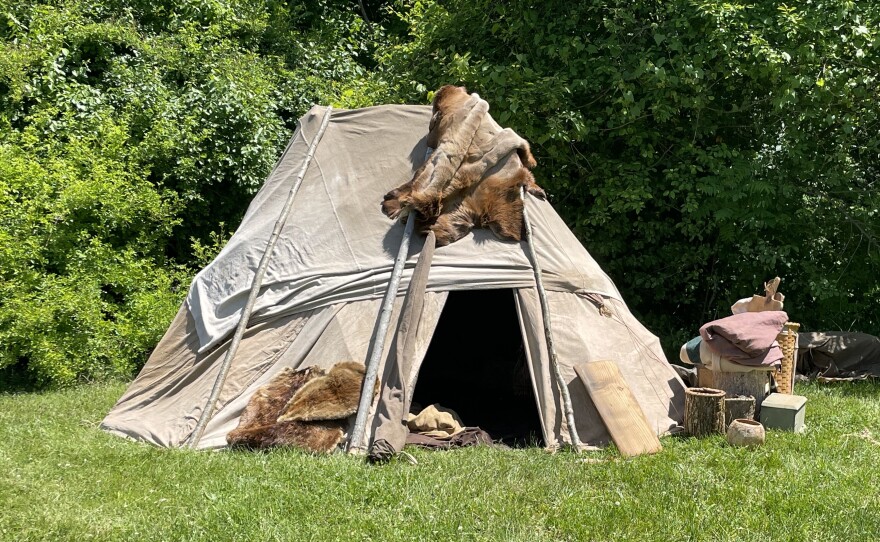
Chris Bullock and his grandson, Quill, adhering to a yearly grandfather-grandson tradition, are portraying the Indigenous Abenaki people.
Quill Bullock: It's good to like, show history how it actually was, because sometimes people can depict history in a different way than someone else would see it. So it's good to be here and show another point of view from someone who wasn't a European.
Tracy Castleberry Knowles: My name is Tracy Castleberry Knowles and I am the Director of Heritage and Programming. When you remember history, you can see what's happening next. There's a lot of things that happen in today's world where I talk to people and they're very sad. They're just very sad about everything that's going on and things are cyclical. And so I think it's important to remember that we've all been here before and we'll all be here again. And that's good. It's not a bad thing.


