A legal fight over whether a decades-old Girl Scout camp on Lake Winnipesaukee will be replaced with multi-million homes has stirred up memories, and emotions, for Donna DiDomenico.
DiDomenico traces a line between her 12 summers at Camp Menotomy and her success as a Wall Street financier. Three-day canoe journeys convinced DiDomenico she could do hard things. Chores, like cleaning latrines, taught her accountability. Living away from home each summer gave her the confidence to move away for college.
“The houses that they're going to turn this waterfront property into are only going to help a few people,” said DiDomenico, now 41, of Manhattan. “Girl Scout camp 100% changed the trajectory of my life and now these young children are not going to have that. And it's something that our community needs.”

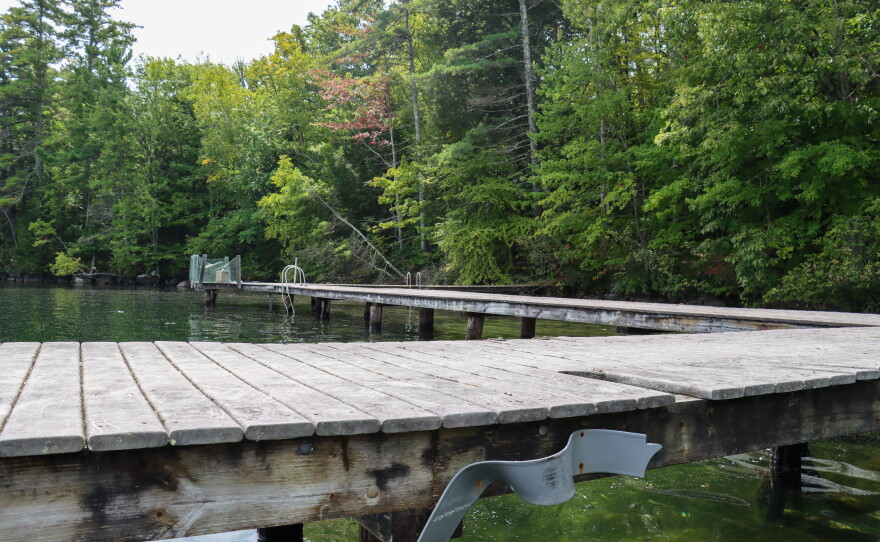
The former 95-acre Camp Menotomy in Meredith is among the largest undeveloped spots on New Hampshire’s largest lake. Its nearly one mile of shoreline is forested save for a few former camp cabins, tent platforms, and a boat house.
Shortly after Covid, the Girl Scouts of Eastern Massachusetts terminated its lease, saying the rustic camp drew too few campers to remain viable. The property’s trustees accepted an $18 million offer from a housing developer, triggering a lawsuit and investigation by the New Hampshire Attorney General’s office.
At issue is whether the trustees violated the terms of a deed when they rejected a competing offer to keep the site a camp. Wednesday, Attorney General John Formella said he anticipates the trustees and developer will pause the sale until his office concludes its investigation.
The legal fight has made headlines.
A different story has played out on Camp Menotomy’s alumni Facebook page. One about the memories and emotions of women who say their lives were shaped by their childhood summers at Menotomy. Women like 56-year-old Christine Surette of Connecticut, who attended Menotomy in the 1980s.

Surette was homesick and unsure of herself when she arrived at Menotomy in 1983 at age 13. She was neither when she returned home. Surette, who went on to work for a New York City ad agency, said those weeks at camp changed her life.
“In such a rural environment, you end up just facing challenges and you learn about yourself, you learn about others, but you kind of rise to the occasion and realize that you're capable of doing a whole lot more than you realized,” said Surette.
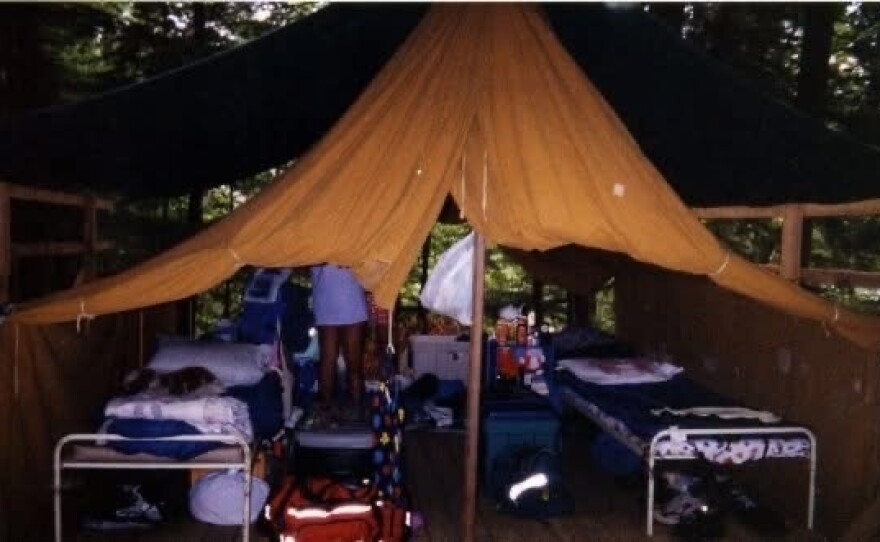
Menotomy wasn’t luxury camping – on purpose. No flush toilets. No electricity. Camping tarps didn’t always keep the rain or the raccoons out. The Girl Scouts believed then that primitive camping fostered female empowerment and self-reliance. As the organization has shifted to more comfortable camping, it has sold or abandoned hundreds of rustic sites like Menotomy.
Jessie Trowbridge, 46, of Massachusetts, learned about the sale in a Facebook post and thought back to her nine years at camp, to the campfire songs, candle ceremonies, and canoe journeys. She said the no-fuss experience is what brought her back to Menotomy each summer.
“What we loved was that we moved through the summer with headlamps and when the sun went down, it was dark,” said Trowbridge, who is among the people challenging the sale in court. “We lived in tents…where the wind would come in off the lake. It doesn't need tennis courts and swimming pools and golf carts. The way it is is wonderful.”
Jen Coombs, 68, can see both sides.
Coombs, her mother, and her grandmother were Menotomy campers. Coombs is also part of the Massachusetts Girl Scout council that terminated the lease when it decided modern-day upgrades were economically unfeasible. She said the council tried to cover costs by opening the site up to other groups and transitioning to a family camp, but it couldn’t survive the pandemic.
Still, Coombs opposes selling the site to a developer.
“I would hate to see it not be a camp,” she said. I used to say I wish I had the money so that I could buy it and I would run that as a camp in a heartbeat.”

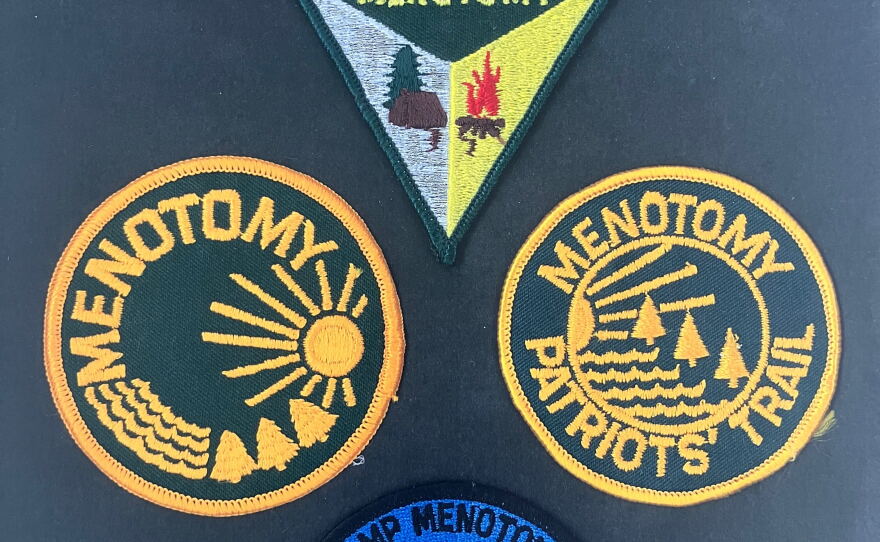
It’s been two decades since 46-year-old Abby Regan left Camp Menotomy. She started attending when she was 5. After her last summer, Regan and a few Menotomy friends got matching tattoos of a daisy in the camp’s blue and yellow colors.
Regan said sleeping in tents in the rain, cooking over a campfire, and managing water emergencies gave her survival skills. Those experiences are informing how she’s raising her three sons in Florida.
“I want my kids to get into trouble,” Regan said. “Good trouble and not trouble where somebody's getting hurt. They need to learn from their mistakes, and that's what we did at camp.”
Now, Regan remembers the last time she sat around a Menotomy campfire more than 20 years ago.
“I was the last person. I sat there until the fire went out, and it was really sad,” Regan said, her voice filled with emotion. “Now when I'm at a campfire, sometimes I just sit and wait for the fire to go out.”