


Up a winding road in Concord, past a meandering flock of turkeys and atop a wooded hill, things might seem quiet at Generation Farm. But for James Stever and his wife Marley, the only employees, this summer has been anything but.
“If someone wants to talk to billing, it's me, customer service, it's me… Not just me, but like Marley and me,” said Stever. “We do everything.”
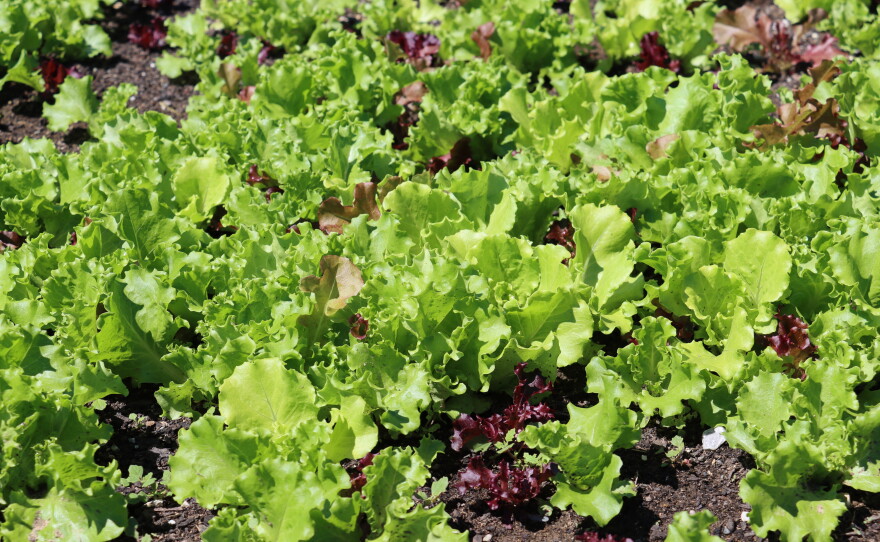
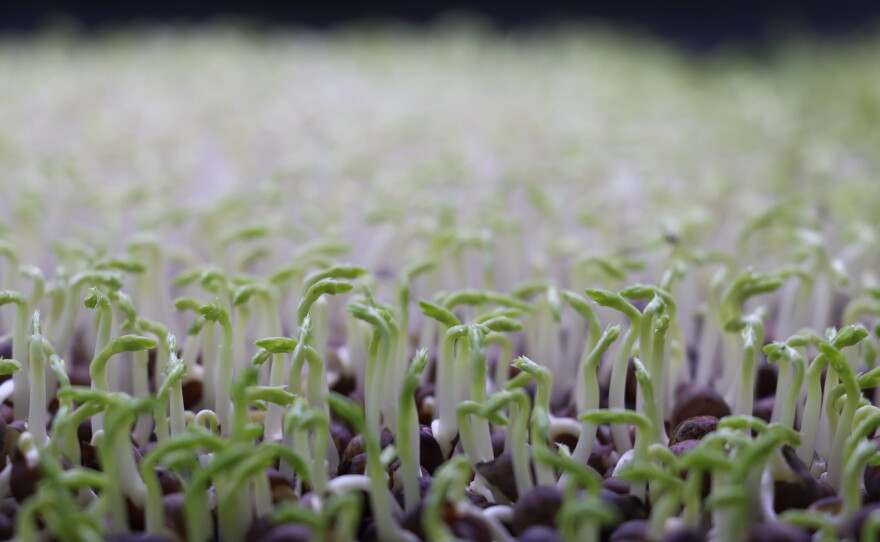
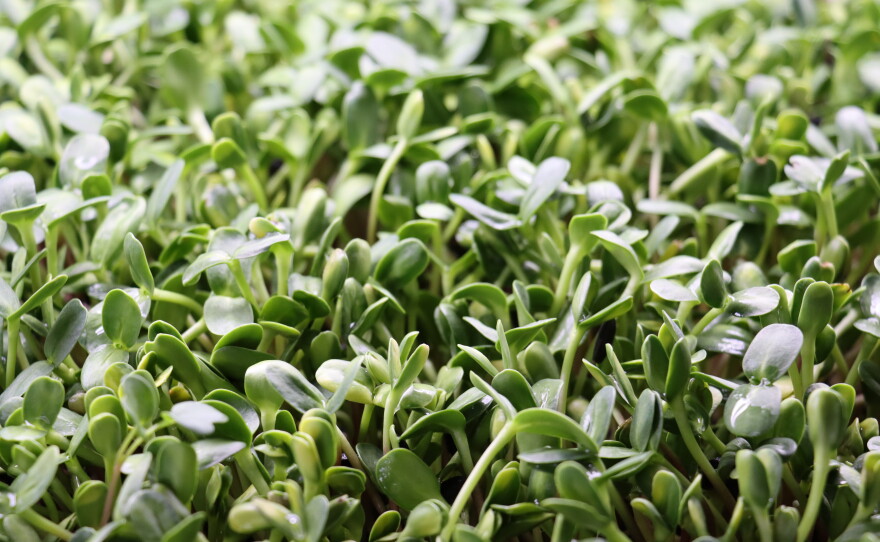
Their two-person operation grows a variety of greens, including lettuce in long garden beds and microgreens inside a large barn with grow lights. And this summer, Stever says they’ve been selling out every week.
That’s partially because of fears over cyclospora, a parasite that’s led to large-scale lettuce recalls across the country — including in New Hampshire. That outbreak caused consumers to rethink buying lettuce from chain grocery stores and instead prioritize local suppliers.
“You're getting something that's way fresher. It's going to last a lot longer. It's going to be higher quality,” says Stever. “And for all those other reasons, you can feel good about it.”
As the president of the Northeast Organic Farming Association of New Hampshire, Stever has an up-close view of the local food system, and he’s heard many other local farms are also having a great growing season this summer. But New Hampshire’s regional food system also has a rich history of Granite Staters buying local products.
"New Hampshire is like a small farm state, meaning like there's not a lot of huge farms in the state of New Hampshire,” he said. “And so you get a lot of really cool, tiny little farms like ours."
Generation Farm sells their greens wholesale to local restaurants, like Revival Kitchen and Bar in Concord, and co-ops across the state.

“You don't need huge pieces of land to produce a good amount of food locally… you don't have to have like a thousand acres,” said Stever. “If I had 1,000 acres, I wouldn't know what the heck to do.”
But there’s a lot that goes into meeting heightened demand for local lettuce.
There’s set criteria that have to be met to become certified organic. Some practices include crop rotation to ensure soil health, using more physical tools to preserve soil quality and not using synthetic pesticides to manage pests, weeds and disease.
One chemical-free practice that allows Stever to turn over his beds and replant quickly, is a common technique called solarizing. After he’s harvested his beds of lettuce, he lays a clear tarp over the cut beds and the sun breaks down the organic matter underneath. On a series of hot summer days, the remaining growth underneath can break down rapidly, all without using chemicals.
“You rake off the decomposed organic matter, and then you can directly seed back into a sterile seed bed,” said Stever.
He says he’s also struggled with some pests over the years. He uses insect netting to keep away the bugs that may harm the greens. He also has a bone to pick with the local porcupines.
“The porcupine loves eating on pristine greens,”said Stever. “They won't go for, like, something that's low quality.”
So Stever uses a small electric fence that can be moved around the growing beds and plugged in each evening to keep the porcupines away.
“If we lose a crop, we lose it,” said Stever. “So our best bet is to hedge our bets and prepare for the worst.”


