State lawmakers are considering a measure to end New Hampshire’s requirement that all parties must first give their consent before they are recorded during a private phone call or in-person conversation.
The prime sponsor says permitting secret audio or video recording, including of politicians, would be a service to the public.
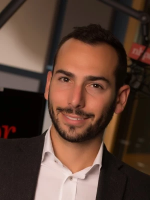
“What this bill is really about is bringing accountability and transparency through the use of recording measures,” Rep. Joseph Barton, a first-term Republican from Littleton, told members of the House Judiciary Committee during a public hearing on the measure Wednesday.
Recording laws vary across the country, with the majority of states permitting someone to record a phone call or private conversation without first obtaining the consent of anyone else present. Recording in places with an expectation of privacy, such as a locker room, is generally prohibited even in so-called “one-party consent” states.
New Hampshire, along with about a dozen other states, requires permission first be obtained from all parties on a call before it can be recorded. That’s also the case for in-person communications when there is an expectation of privacy.
House Bill 1508 would undue that requirement, allowing people to record both audio and video without other people’s knowledge that they were being recorded. The bill, however, outlaws using secretly recorded audio or video for “blackmail or harassment.”
“One-party consent, it's a service to the public,” Barton told lawmakers.
Barton has held leadership positions with Project Veritas, a conservative non-profit formerly led by James O’Keefe that has used secret recordings to advance its political causes. On its website, Project Veritas describes its actions as journalism, despite employing surreptitious tactics that most media outlets do not condone.
In the past, Project Veritas has targeted NPR, Planned Parenthood and ACORN, an organizing group. Project Veritas has been accused of releasing edited and misleading videos in order to embarrass its targets.
According to a 2023 tax filing, Barton served as an unpaid director for the non-profit. He didn’t respond to an interview request.
During Wednesday’s hearing, Rep. Paul Berch, a Democrat on the committee, asked Barton if passing the law meant that lawmakers should always assume they are being recorded, even when speaking with colleagues.
“I should have that conversation understanding that it could be in WMUR tomorrow?” Berch asked.
Barton responded that it should be anyone’s expectation that they are being recorded.
“If you're an adult, you're responsible for who you talk to,” Barton said. “You shouldn't have an expectation of privacy when you talk to somebody else.”
Lawmakers in New Hampshire voted down a similar measure in 2024.
Maine permits someone to record a private conversation or telephone call without first obtaining consent from other people, while Massachusetts has a law similar to New Hampshire that prohibits such recordings.